
RFI Turnaround measures the days from when an RFI was raised to when it was answered, across every RFI you can see. A private RFI counts only for the people named on it and RFI admins, just as on the project. The report has no filters.
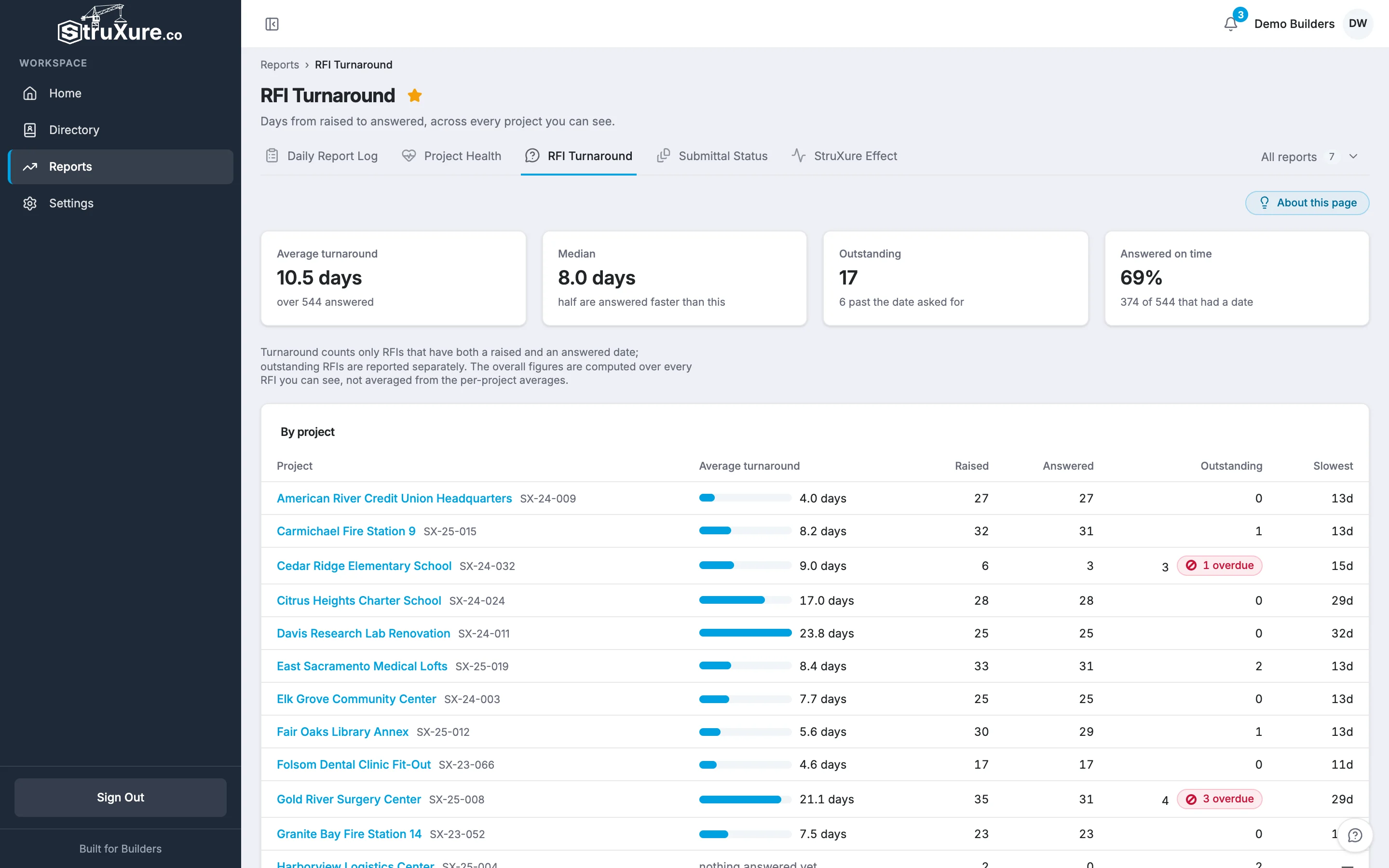
The figures at the top
| Figure | How it's worked out |
|---|---|
| Average turnaround | For each RFI with both a raised date and an answered date, the calendar days between them. This is the average of those, "over" the number answered. |
| Median | The middle of those same turnarounds: half of the RFIs were answered faster than this. |
| Outstanding | RFIs still in draft or open. Below it, how many of them are past the date the answer was required by. |
| Answered on time | Of the answered RFIs that had a required-by date, the share answered on or before that date. |
Outstanding RFIs are never counted in the turnaround: an unanswered RFI has no turnaround yet. The overall figures are worked out over every RFI you can see, not by averaging the projects' averages, so a project with ninety RFIs weighs more than one with two.
By project
One row per project that has RFIs:
- Average turnaround, with a bar scaled to the slowest project. "nothing answered yet" if no RFI there has been answered.
- Raised: all its RFIs you can see.
- Answered: those with an answered date.
- Outstanding: those still in draft or open, with a red badge for how many are overdue.
- Slowest: the longest turnaround on the project, in days.
Click a project's name to open its RFIs.
Slowest answers
The ten answered RFIs that took the most days, with the project, the date answered and the days taken. Click an RFI to open it.
Empty pages
- No requests for information to show means you can't read RFIs on any project.
- No RFIs raised yet means you can, but there are none.